Sunday, December 11, 2011

Learning Through Technology


Nyomi Mosley
ENG 102
Cline
9 December
                                                         Learning through Technology

I have found this class to be rewarding in some ways while in other ways hard. This class differs from other ways I have learned because I am so used to learning things from my parents or from a person. Having an online teacher was slightly strange for me, and hard, because it made things harder to grasp. When I was just reading things all the time I found that I got bored and uninterested in the learning part of the class. However, when I was watching the videos and learning about different things I was able to really grasp the things that professor Cline wanted us to learn, and I found that I was actually interested. Even though it was hard for me to grasp certain things from learning online I was able to learn one very important lesson. That lesson is that I need to be in a chair and sit and squirm and get frustrated in order to really grasp things that will teach me how to write better. Online learning has helped me to learn many things the hard way but I have grasped many of those things because I taught myself to take the time to learn about them.

The technology that helped me the most this semester were the videos that professor cline put on blackboard. Those videos showed me how to properly write an analysis and a summary. They also showed me how to use the library database, and they showed support from my teacher. Before I took this online class I had no idea how to use analysis and summary, or even a library database in an essay. People had explained them to me before but for some reason I learned more by watching how to use each of them than I learned from people telling me. I was encouraged in my learning process by the many videos Cline put on blackboard letting us know that she was available to help us if we ever needed it. I never went to her and asked for help but it was still nice to know that she was there if I ever needed it.
Out of all of the technologies we used in this class I found the videos to be the best and the most beneficial. Because I found them to be so beneficial I plan to use more videos in my future. I plan to make several videos of my family members to save memories and if we are allowed to in my next class I plan to use videos as well. I would really like to thank Professor Cline for providing such a wonderful class this semester. I truly enjoyed every part of it, and I have learned a lot to use next semester.
Here is the link for the visual; this site also has some insight to learning with technology:

Sunday, December 4, 2011

Final Project


Please enjoy! all of this information was taken from my own opinion of what I learned in my English 102 class at Yavapai College.

Saturday, December 3, 2011

Taking a Look Back

Nyomi Mosley
ENG 102
Cline
3 December, 2011
Taking a Look Back
I have learned so much in this writing class, and I believe that there are many things I can use towards my next class, specifically summary and analysis. If you can believe it, I had no idea what analysis was before I joined this class! I knew what summary was because I had written a few short explanations of objects or books. However, analysis was something very new to me, and it something that I plan to use in my future papers. I also plan to involve better punctuation. I noticed that in many of my essays this was something that I lacked, and so I would like to work on it in my future essays.
When it comes to reading in ENG 102 I found that many of the readings in this class were very enlightening and interesting. I especially enjoyed reading the poem called the tiger. I enjoyed its reference to God’s creation of the tiger very much. I also enjoyed reading Frankenstein because it enlightened me to an understanding of what some people go through in this world. I have met many people that live in poverty and have seen people that live on the streets. However, I never really understood what it is like for them. Reading Frankenstein and reading about his monster’s trials I was able to grasp what it would be like for those people living on the streets. I was deeply affected by this reading, and I must admit that I almost cried at one point. Frankenstein is now one of my most favorite pieces of literature.
I believe that there are some things in this class that I have learned very well , and others that I have yet to fully grasp. There were two things that I really understood which are: the difference between summary and analysis, and how to read literature. I believe that the reason why I really understood these two things was because they were the two things that I found to be very interesting.
I believe that I still am using the same writing process that I learned about in ENG 101. However, the thing that has changed is that I am now involving more of the summary and analysis to my writings.
I believe the most challenging thing for me in this class were my final drafts. I found that it was hard to change something that I had already written, and that I had my mind set on. I don’t think that this is a problem that I have overcome this semester. However, I am looking to make progress on it through practice in my future.
I would really like to thank Professor Cline for this excellent class. Through this class I learned many things that I did not previously know, and I was able to remember important things that I had forgotten. So thank you very much Professor Cline! I really enjoyed your class!
Here is the link for the picture:

Sunday, November 20, 2011

Learning about Zombies


Nyomi Mosley
Cline
ENG102
20 November, 2011

Whenever I read something I expect to be educated. Call it what you will but I expect whatever I read to be worth my while, and in order to that to happen I need to learn something from it. I found that the first chapter in the book called “American Zombie Gothic” was interesting and I learned a lot about Zombies. It was great to know that there are so many movies about zombies. Such as: Planet terror, resident evil, 28 days later, and so on. I have seen a few of the ones that Bishop mentioned but I was still shocked when I read about all the ones that were mentioned. I also found it interesting when it was mentioned that the times that movies were made were related to how the movies were made during that time period. I must admit that somewhere deep in the back of my head I knew that but I never really realized how true it was until after I read this chapter. Through various parts bishop points out many movies that relate to certain time periods and zombies. I was surprised by the fact that Zombies have no origin. He mentioned how all of the other fictional characters have an origin except all except for zombies. As I was reading through that part I started to think to myself about all the fictional characters I knew about and their origin. Cinderella originated from the book I read as a child as did all of the princess characters. Jack and Jill originated from that little rhyme I knew when I was younger. The wizard of Oz characters originated from the movie I watched when I was younger and still watch today; just for fun. All of the characters that I thought about had an origin. All except for the Zombies! It was really interesting to me how all of the points that Bishop made were very well supported. I also found that Bishop really researched his points this made his essay believable. I can defiantly say that this chapter was very well written. By the end I felt as if I had just been fully educated on something I knew nothing about before I started reading.
Here is the link for the picture:
http://www.zombieseverywhere.org/2011/08/story-time.html

Sunday, November 13, 2011

Love in the Art of Shakespeare


Nyomi Mosley
Cline
ENG 102
6 November, 2011
Love in the Art of Shakespeare
His poems have caught the eyes of many people across the world. He has enlightened the hearts of many through his work and brought upon several great discussions. Shakespeare is a well known author of poetry and drama, and he wrote many plays in during his lifetime. (World Book Encyclopedia, 342-347)Many of Shakespeare’s poems seem to follow a pattern. This pattern begins with and explanation of the main character then a love forms, and that love either ends in heartbreak or in a deep realization of truth. Included in this pattern Shakespeare tends to involve a feeling of being trapped. At many times his work includes characters such as Romeo and Juliet, who like some of his other characters in a few more of his poems seemed to be trapped away from love. Through all of his work he conveys a message to his audience. It is an amazing fact that many of his poetic works and plays still have the ability to uplift spirits, and will always be works of art that will last for generations to come.
Shakespeare’s sonnets from “Sonnets to Sundry Notes of Music” catch your eye from the moment you begin to read. This first sonnet is about a lord’s daughter that looked up to one man yet loved an Englishman. This tale ends with a choice the maiden made to go with the Englishman. In the words of Shakespeare: “But one must be refused; more mickle was the pain. That nothing could be used to turn them both to gain. For, of the two the trusty knight was wounded with disdain; Alas! She could not help it. The art with arms contending was victor of the day; which by a gift of learning did bear the maid away. Then by lullaby the learned man hath got the lady gay” (Shakespeare, 1311). After reading this sonnet and some more of Shakespeare’s comedic writings I will never feel the same way towards his writings. I have been surprised by the fact that many of his works are filled with rhymes that are cheerful and witty, and show a side of Shakespeare that is unfamiliar. The surprise that this poem brings to Shakespearian work is only one of the many things that make Shakespeare such a wonderful author.
However, not all of his work is witty and clever; most of his texts are very serious. Many of his works give excellent life lessons, such as sonnet number five of the “Sonnets to Sundry Notes of Music”. This sonnet is about a shepherd who is pleading with the lover to live out in the world together. The shepherd describes their life together as pleasurable and melodious. However, the lover realizes that the reality of living with this shepherd out in the world will not be as magical as the shepherd makes it seem (Shakespeare, 1312). The life lesson is to not let love get in the way of looking at reality. Many times people let love get in the way of family and of friends and of having a future. Shakespeare showed through the wisdom of the lover that there are things in this world other than love. He showed that we should learn to look at those things and not become blinded when love presents itself. In many of his texts he gives life lessons that are encouraging in the way of doing what is proper. This is another one of the things that makes Shakespeare such a great writer, and that has allowed his work to succeed for such a long time.
In some of the Shakespearian plays and poems the feeling of being trapped is expressed. According to the world book encyclopedia this play is said to be about: “Two teen aged lovers in Verona, Italy, who are caught in bitter feud between their families” (World Book Encyclopedia, 356). This play displays that Romeo and Juliet are trapped from expressing their love for each other due to a feud between their families. The story continues with Juliet’s father forcing her to marry a man who is not Romeo. At this point in the story we see the trapped feeling in Juliet. She feels that she cannot live trapped in a relationship with a man she does not love. Thus she chooses to take a drug that causes her to appear to be dead, so that she can escape. Juliet’s father believes she is dead and alerts the kingdom, and eventually this alert reaches Romeo. He does not know that Juliet is not dead but what he feels is that he cannot live without her; he feels trapped without Juliet. So he chooses to die by poisoning himself. Juliet eventually wakes up from her sleep and, realizing that Romeo is dead right next to her, sees that she too cannot live without him and so she decides to kill herself with a knife. This point in the story shows another instance of the trapped feeling. Romeo and Juliet cannot stand to be trapped in a loveless marriage or in a world away from each other’s love, and so they go through drastic measures in order to be together. The thing that Shakespeare is trying to convey through this play is that people will do anything for love. Yet, in other plays he suggests that this is not always the best road to take.
Shakespeare has written many wonderful poems. When I read my first poem by Shakespeare I began to really enjoy it by the time I reached the end of the first paragraph, and after every sentence I was encouraged to read on. The poem I read was called “A Lover’s Quarrel”. This poem involved two characters: A daughter, the one she loved, and a father.  The maiden in this poem is communicating with deepest regret to her father her sorrow over the man she married. This maiden developed a deep love for a man that she did not know very well, and she chose to act on it. She says to her father “But woe is me! Too early I attended a youthful suit, it was to gain my grace, of one by natures outwards so commended, that maidens’ eyes stuck over all his face. Love lacked a dwelling, and made him her place; and when in his fair parts she did abide, she was new lodged and newly deified.”(Shakespeare, 1306) She states earlier that she knew he was too young, and that other girls enjoyed being around him too much.  However, she ignored her wise judgment and rushed in, and when he asked her to marry him with “The deep green emerald” (Shakespeare, 1307) she openly consented. Throughout her marriage we see that she is trapped with a man that wants her to be with him yet continues to betray her. She expresses his betrayal with the following words: “Thus merely with the garment of a Grace the naked and concealed fiend he covered the unexperient gave the tempter place, Which like a cherubim above them hovered” (Shakespeare, 1308). As the story goes on she explains her reconciliation with this man to her father: “O! That infected moisture of his eye, O! That false fire which in his cheek so glowed. O! That forced thunder from his heart did fly. O! That sad breath his spongy lungs bestowed. O! All that burrow’s motion seeming owed. Would yet again betray the fore-betrayed and new pervert a reconciled maid” (Shakespeare, line 328). I learned from this poem that Shakespeare not only writes poetry, but he also teaches lessons. Through his poetry Shakespeare has the wisdom to express his opinion of love, and do so in a way that is not offensive to anyone.
In this poem Shakespeare wrote about the deep love that one person can have for another and how that love has the ability to betray and hurt. While I was reading this poem for the second time I noticed that Shakespeare involved a lesson about avoiding the pain that comes with certain types of love. In this poem he expressed through a tale that people should not do anything for love. He expressed through this story that, when love is not embraced in the proper way it can have harsh consequences. Shakespeare wanted his readers to understand that if they want to end up in differently than the maiden, they need to learn how to control their feelings until they gain knowledge of their prospective love. If the maiden had controlled her feelings, and taken the time to become aware of the man, then she would have lived a better life. This is a great life lesson and one that like Shakespeare’s work can be taught and learned for many years to come.
It is a fact that Shakespeare is a well known poet and play writer. To many he is considered one of the greatest around. Through performances of his plays, readings of his texts, and quotations of his powerful words Shakespeare has impacted many, and will continue to do so for a long time. Many of Shakespeare’s pieces have the power to tell a story and give a clever lesson. Through the understanding of Shakespearean writings this fact can be seen. Most of Shakespeare’s poems are filled with sad stories of love. Many of which include lessons of love, and how it should be handled. The work of Shakespeare shows that he is not only an excellent playwright and poet, but also that he is very wise.

 Works Cited
Shakeapeare, W. Sonnets to Sundry Notes of Music. In W. Craig, The Oxford Shakespeare (pp. 1311-1313). New York: Oxford University Press.
Shakespeare, W. A Lover's Complaint. In W. Craig, The Oxford Shakespeare (pp. 1305-1308). New York: Oxford University Press.
Wadsworth, F. W. (2000). William Shakespeare. In W. B. Encylopedia, Volume 17 (pp. 342-347). Chicago: World Book Encyclopedia.
Wadsworth, F. W. (2000). William Shakespeare. In W. B. Encylopedia, Volume 17 (p. 356). Chicago: World Book Encyclopedia.

Sunday, November 6, 2011

Annotated Biography


Shakespeare, W. A Lover's Complaint. In W. Craig, The Oxford of Shakespeare (pp. 1305-1308). Dublin: Oxford University Press.
In this source a quote is taken from the ending lines of "A Lover's Complaint" written by William Shakespeare. The way that Shakespeare ends his poem is so powerful and because of this it is essential to the effect of my essay. The effect that this essay holds on its readers is very important. Throughout Shakespeare's work he impacts his readers. This quote is a great way to represent that effect and that is why I would like to use it in my essay. It will bring in the passion of Shakespeare's poetry as well as add the drama that my essay needs in order to establish a meaningful paper for my readers. This quote will also be used to help the readers of this paper better understand the writings of Shakespeare in a significant way.

Shakespeare, W. Sonnetes to Sundry Notes of Music. In W. Craig, The Oxford of Shakespeare (p. 1311). Dublin: Oxford University Press.
In this source I used Shakespeare's first sonnet in "Sonnets of sundry Notes of Music" It is important for the readers of this essay to have this information in order for them to look at the poem themselves to so that they can see and believe that this essay is giving a proper explanation of Shakespeare's work. The plays and poems of Shakespeare are very well known and much respected. It is important that this essay properly interpret the work of Shakespeare since that is its main subject. In order for this to take place the readers of this essay must be able to access the material of Shakespeare and be sure that this essay explained it properly. There are many references to this source in my essay and so it is important that it is included.

Wadsworth, F. W. (2000). William Shakespeare. In W. B. Encyclopedia, Volume 17 (p. 356). Chicago: World Book Encyclopedia.
In this source I quote William Shakespeare’s Romeo and Juliet as found in the world book encyclopedia. The full story of Romeo and Juliet is excellent, and exactly what I am trying to explain to my readers. However, it is very long for me to involve in my essay, and would be very difficult to understand, and would take a lot of room to explain. In this quote, the full story of Romeo and Juliet is explained in a way that is simple for readers to understand. This quote summarizes the story of Romeo and Juliet, which will help me to quickly establish one of the many points I have in this essay. Because this story is a central point of one of my paragraphs and that paragraph is essential to my entire essay it is imperative that I use this quote to the greater effect of my essay.

Sunday, October 30, 2011

My Plan for the Final Essay


Nyomi Mosley
ENG 102
Cline
10-30-11
For my final project I plan to complete option #1. I chose this option because I would prefer to write about a real person rather than a fictional character. I hold nothing against fictional characters it’s just for some reason I found writing about an author to be more interesting. I was particularly interested with professor cline’s suggestion of Shakespeare. Unlike many other people, I know, I have not read any of Shakespeare’s work beyond the children’s version of Romeo and Juliet.  So in reading and writing about this author I would like to learn for myself about Shakespeare’s work and possibly give some insight to others about Shakespeare’s writings. I plan to read a variety of his work so that I can better understand his writing style from a broader perspective.  After I understand his style of work from this perspective I plan to find a topic that really captures his artistic style; one that will not take more than 7 pages to write about. I realize that in order for my essay to be in the proper formatting that was assigned to this paper I must shorten my topic. In order to do so I plan to do plenty of research. My research will be found either in the YC database or from books at my local library. I find these sources to be trustworthy because they are sources that were well researched and concluded to be true. I truly hope that this paper will be one of the best I have written, and I am looking forward to the final product.
File:Equal Sign.png
Here is a link with some tips that might help you in writing your own essay: http://lklivingston.tripod.com/essay/

Sunday, October 23, 2011

Nyomi Mosley
ENG 101
Cline
23 October, 2011

Professor Cline,
When I first started this semester in English 102 I knew it would be difficult. However, I had no idea that you would help us so much in the process of learning. In this class I struggled with everything going on, with work, and school, and family. However, the videos you gave us to watch and the pointers you made on our papers helped me so much, and made this class the best one I have ever taken. Many times I was actually excited to get on the computer and work on the assignments you gave us. I have completed several English assignments in my years of home school, and I have also taken English 101 at the college. After taking English 101 I thought I could not possibly learn more! However, my second semester of English has proved my thoughts to be wrong. In English 101 I wrote three types of essays. I wrote a narrative, a research essay, and another one that was like a belief essay. Although those essays where fun, I have never had so much fun, and improved my writing skills as much as I have doing literary anlysis in English 102 with you.
Although I have learned so much I still have a few goals that I expect to accomplish. The first thing I would like to do is become a better summary writer. When I summarize a story in writing I tend to drift more towards analysis and involve my own ideas rather than simply stating what the story is about. I would also like to work on sentence structure. I have learned a lot about it this semester yet; there are some areas where I am still a bit shaky. The area that I would like to improve on the most would be my ability to convince the people that read what I write. Simply because writing in a way that people can agree with makes text easier to understand. I would like to make things easy on my readers instead of making them confused and upset with the words I write. The final thing I believe I need to work on would be the repetitiveness of my papers. I have had a problem with this since I was a child. I would write papers and repeat the same thing several times because I wanted people to really understand what I was writing. I have gotten better yet; there is still room for improvement. I just hope it’s not too late! Like I enjoy this class so much, and I cannot wait to get started on the next half of the semester! Thank you so very much for your help, this semester, and I look forward to completing this class, with you!


Sincerly,
                              Nyomi Mosley

Sunday, October 16, 2011

Essay # 3


Nyomi Mosley
Cline
ENG 102
16 October, 2011
Fear in Frankenstein
In the book of Frankenstein written my Mary Shelly in 1818 fear is a prevalent emotion, which is involved in every character. It would seem that her point of making fear so prevalent in this book was perhaps to illustrate what fear does in the overall effect of people lives. As seen through Mary Shelly’s book, fear can have tremendous effects all of which can produce both excellent and harsh effects on people’s lives.
The first characters presented in this book with fear are the sailors and their captain. They both fear for the same basic things, death, and not returning home victorious from their quest. However, the captain’s fear differs from the fear of the sailors. To the captain the quest is more important than dying before seeing his beloved sister again. On the other hand, the sailors feel that returning home without a victory is more important than dying on their voyage. The captain expresses his wish to complete the quest with the following words “How all this will terminate, I know not; but I has rather die, than return shamefully, my purpose unfulfilled. Yet I fear such will be my fate; the men unsupported by ideas of glory and honour, can never willingly continue to endure their present hardships.” (Shelly, pg 150) The unwillingness of his sailors to continue on this quest shows that their fear of death was greater than their fear of not returning home victorious. (Shelly, pg 150)The fear presented with the captain and his sailors turned out to be ineffective in their ultimate goal to search for parts of the world never before visited. However the fear created by Mary Shelly in these characters seemed to be effective to a greater goal and that is life.
The next character in Shelly’s book that expressed fear was Frankenstein. Frankenstein showed fear for his family, his friends, and even his monster. To Frankenstein the monster was a very frightening creature of his creation. Frankenstein’s monster had already killed a dear member of his family and had to continue to do so if Frankenstein did not create a female companion for the monster. The monster of Frankenstein presents his request with the following words “We may not part until you have promised to comply with my requisition. I am not alone, and miserable; man will not associate with me; but one as deformed and horrible as myself would not deny herself to me. My companioun must be of the same species, and have the same defects. This being you must create” (Shelly, pg 97) and in another portion he states with his revenge if Frankenstein does not grant him a female companion: “Shall I respect man when he contemns me? Let him live with me in the interchange of kindness and instead of injury, I would bestow every benefit upon him with tears of gratitude at his acceptance. But that cannot be; the human senses are insurmountable barriers to our union. Yet mine shall not be the submission of abject slavery. I will revenge my injurious; if I cannot inspire love, I will cause fear; and chiefly towards you my arch-enemy, because my creator, do I swear inextinguishable hatred. Have a care: I will work at your destruction, nor finish until I desolate your heart, so that you curse the hour of your birth.” Throughout this book Frankenstein is portrayed as a man who is driven to create a female monster for fear of what his own creation will do to his family. This fear blinds him from seeing the overall effect that this second creation will have on his creation. He sees this towards the end with the following thought: “He has sworn to quit the neighborhood of man and hide himself in deserts; but she had not; and she, who in all probability was to become a thinking and reasoning animal, might refuse to comply with a compact made before her creation. They might even hate each other…” (Shelly, pg 114) Frankenstein realized with fear that if he created another female monster she would not want to be around his previous creation. When he realized this he also saw the effect that the monsters female companion would have on the world. He states: “Even if they were to leave Europe, and inhabit the deserts of the new world, yet one of the first results of those sympathies for which the deamon thirsted would be children, and a race of devils would be propagated upon the earth, who might make the very existence of the species of man a condition precarious and full of terror.” (Shelly, pg 114) In Frankenstein’s fear of what his monster would do to his family he failed to realize that his second creation could have a more terrible effect on the entire world. His concern for the entire world conquered his fear for his family, and he destroyed his progress on his second creation. (Shelly, pg 115) As we can see from Frankenstein, fear can go two ways. He could have chosen to go with this smaller fear and continued to look out for the good of his family by making the female monster. Yet, he chose to look a bit further into an even bigger concern, and destroy his creation for the safety of the world. We have a chose as well, we can let fear dominate or we can overcome it with the right decision.
The next characters that shows fear in this book is Frankenstein’s family and friends. Their fear is for Frankenstein emotional state. Throughout this book Frankenstein exhibits an amount of emotion according to the events that are presented in his life time. A number of times his family and friends fear for his well being. The fear of his friends and family encourage Frankenstein to travel, and gives him happiness. This can be seen when Frankenstein request permission from his father to travel, and his father openly consents. His father hopes that this trip will bring Frankenstein happiness, and restore him to his natural self. (Shelly, pg 104-105) Elizabeth’s feelings were the same as she said goodbye she wished from him to return happier than he had left. (Shelly, pg 106) His friend Clerval was with him on the trip for a time then they separated. However, Clerval sent him off with the same hopes his family gave; that he would return with the happiness that he once had. (Shelly, pg 112) Because of their fearfulness for his well being Frankenstein’s family and friends were supportive and encouraging in his endeavors.  With the support of his family Frankenstein was able to figure things out for himself. In the end this led to a maturity in Frankenstein, that we did not see in the beginning; but  had a great impact on his life.
The final character that we see with fear is Frankenstein’s monster. Unlike the other characters in this book most of his fear was that of a selfish nature. He held fear for his loneliness, and for what others would think of him, a number of times. However, he was not made with this fear it was brought on through a number of experiences. These experiences were with people that feared Frankenstein’s monster due to his frightening appearance. His first experience was with an old cottager in the woods. He went into this cottager’s house expecting to be welcomed but instead he frightened the old man who immediately ran away. The old man brought back many men who tortured the monster until he was forced to leave. When reading about his next experience with the prairie family we see him hold care for the family’s well being. He chopped wood for the family, he shoveled their snow, and he helped the family produce food. (Shelly, pg 74-75) Eventually, Frankenstein’s monster grew very comfortable with this family and he believed that because they had kind hearts they would accept him. Due to this notion, he endeavored to meet this family beginning with the grandfather. He says: “I resolved at least not to despair, but in every way to fit myself for an interview with them which would decide my fate.” (Shelly, pg 88)  When Frankenstein’s monster met the family the outcome was not as he expected. The family’s fear for his appearance caused them to refuse to accept him. His next experience was with a man whose daughter’s life he had just saved.  This man was so fearful of his appearance that instead of being grateful for his daughter’s safety he shot Frankenstein’s monster. (Shelly, pg 95) At this point Frankenstein’s monster became angered and resolved to kill man who had caused him so much pain. He says: “I vowed eternal hatred and vengeance to all mankind.” His rage upon mankind turned into the fear he held before that none would accept him. He realized that the one who had made him this way was responsible for the fear he held that none would accept him because of his appearance. This selfish fear led him to resolve to bring pain to Frankenstein in any possible way for the painful fear he had given to his creation. Frankenstein’s monster ended up killing many members of Frankenstein’s family, and eventually Frankenstein himself. The lesson we learn from the fear of Frankenstein’s monster is to embrace fear and not let it overcome us. With Frankenstein’s monster he held the fear that none would accept him and he chose to find the reason why and act on that reason. His actions eventually led to the killing of people that were very dear to Frankenstein and eventually Frankenstein himself. The death of Frankenstein took away his chance of happiness and forced him to live the life of loneliness that he began with. This example is one of the many things that fear can make people do, and what effect those actions have on their lives. Perhaps our situations of fear may not be as drastic as the fear of Frankenstein’s monster yet, we do have fears. The choice is ours of if we are going to let those fears ruin our lives or if we are going to rise above those fears and come out on top.
It would seem that the book of Frankenstein is about fear and the outcomes it can have on the overall effect of people’s lives. For the captain and the sailors fear resulted in the effect of saving their lives, and this can be perceived to have made their families happier than the alternative. For Frankenstein his fear resulted in the saving of the future world, this makes for a greater outcome than simply the saving of his family. For Frankenstein’s family their fear allowed Frankenstein to experience things and grow, this allowed for a wiser Frankenstein than the one we read about at the beginning of this book. Then last but not least we read about Frankenstein’s monster, and his fear. Unfortunately his fear led to a miserable ending because of the way he chose to embrace his fear. The lesson that Mary Shelly tried to give in this book was that fear can have many outcomes some good and some bad. However, it is the way that we choose to act on our fears that determines the affect it will have on our lives.

Works Cited:
Shelly, Mary. Frankenstein. London: W.W. Norton & Company, INC., 1818.
Here is the link for the picture; this link also gives some advice on the topic of fear:

Sunday, October 9, 2011

The One About Percy

Nyomi Mosley
ENG 102
Cline
9 October  2011
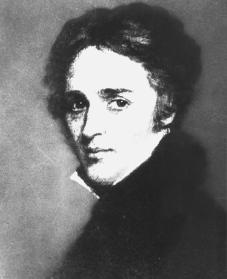
Percy Shelley. Reproduced by permission of AP/Wide World Photos.
The critical article that I chose to write about was written by Christopher Small, and it is titled “[Percy] Shelly and Frankenstein”. This article was one of modern times writings and unfortunately it does not have a date that refers to when it was written. However it includes an excellent relation of Frankenstein to those involved in Mary’s life. One of the family members that Small seemed to be centered on was Mary’s husband, Shelly. He believed that Frankenstein was an example of Shelly, and that various members of Shelly’s family were also related to some of the book’s characters. In the beginning he also brought up the fact that Byron and Shelly were the people that gave Mary the idea to write Frankenstein. His showed the relation of Shelly’s friends through various examples and explanations each point was well thought out and well researched at every turn.
I believe that Small’s explanation of Frankenstein was one that I never really thought of, and for this reason I was enticed to read his whole article. One thing that really helped me was realizing the fact that Small wrote only about a small part of the book.  When I realized this I really understood what Laura B. Cline was talking about in her video when she was telling us not to choose a broad topic. I find that at times I tend to write about the larger topics. I was in fact thinking about writing about Frankenstein as a whole book rather than finding something specific to write about. Yet, this article caused me to really think about shortening my topics. One thing that made me not want to shorten my topic was the thought that I wouldn’t have enough to write about and thus my essay would not be interesting. However, after reading Christopher Small’s article I realize that a small topic can make for an interesting essay. I do not believe that I will use very much of his article in my third essay, but it do believe that I have learned something about writing my third essay. The reason I have chosen not to use very much of his article in my essay is because I do not see why it is important to involve and outside character in an explanation of Frankenstein. However, I will be taking all that I have learned from this article and using it in my essay. The things that I learned were to find a smaller main topic, and to make my essay interesting as well. These are the things that I believe Christopher Small did very well.
If you would like to know more about Percy Shelly here is a link, this is the same link for my visual:

Sunday, October 2, 2011

Revision of Revision

Nyomi Mosley
Cline
10-2-11
When I write a paper my usual focus is on its sound and structure. So when I revise my focus is usually on the same page. I question myself with question of “How would this paper sound to the reader? Does the paper flow? Am I making good points?” and so on. However, when I was younger I did not really revise because my papers were so long and repetitive. I would read through each paper maybe two or three times but never more than that amount per paper. Now I revise all the time because it affects the outcome of my papers by making them easier to read, and a lot shorter in length.The changes that revising allows to every essay are so numerous that I cannot belive I did not revise in the past.
In my next essay I plan to make several changes. I would like to keep the same points I have yet make them stronger more argumentative. I noticed that was one thing that I lacked in Essay #2. I am also planning on making my explanations less repetitive. Repetitiveness in writing has been a problem with me since I was a child. Many times, I would find myself repeating the same sentence several times in each paper that I wrote. However, I would never realize it because I would never revise! The next revision I plan to make in Essay #2 is to explain my quotes more. In this essay I provided quotes that supported and they supported my points in the essay. However, I failed to provide and explanation of the quote itself. I realize that this may have been beneficial to the explanation of my points yet, it did not allow the reader to focus on understand the poem itself. This brings me to the final change I plan to make in this essay. That is to surround my points and arguments on the poem alone and its meaning. While this essay may have held points that were arguable and possibly correct the essay was not really and explanation of the poem but rather and argument of the poem’s meaning. There are so many changes I plan to make in my essay and I only hope that they will be profitable and make for and outstanding result.
Here is a link I found on revision:
http://grammar.about.com/od/developingessays/a/revisecheck.htm

Image source: http://www.harrycutting.com/photos_people/education-picture-87-IC5030.htm

Sunday, September 25, 2011

Confusion of Sorrow, and Insight to Satisfaction

Nyomi Mosley
ENG 102
Laura B. Cline
9/25/11
     “I saw no cause for their unhappiness; but I was deeply affected by it. If such lovely creatures were miserable, it was less strange that I, an imperfect and solitary being, should be wretched. Yet why were these gentle beings unhappy? They possessed a delightful house (for such it was in my eyes), and every luxury; they had a fire to warm them when chill, and delicious viands when hungry; they were dressed in excellent clothes; and still more, they enjoyed one another’s company and speech, interchanging each day looks of affection and kindness. What did their tears imply? Did they really express pain?” (Frankenstein, pg.74)
senior sm 300x200 Prepare. Protect. Preserve.
     There were many passages that I was enchanted by as I perceived the book of Frankenstein. It seemed to me that every part of the book I read caused me to think about and feel the depth of the story. As I was reading Frankenstein I realized that the book holds not only a story yet also many insights to the things of life. I found in the passage I quoted above that the family had everything they needed, yet they still wanted more. At times in this world we have all we need yet we still need more. This passage gave me the understanding that in life we should identify the blessings we have, what we need, and be satisfied with those things alone.
     I found that the story of Frankenstein was a tale of sadness and pain; a great deal of which was expressed through Frankenstein’s Monster. This passage explains the basic cause of the monsters pain and that is why I believe it is imperative to the book Frankenstein. Frankenstein’s monster suffered sadness and pain because he did not have companionship and thus he felt unaccepted. I found through his explanation of these people’s lives that he expressed his sorrow in not being able to have what he truly desired through his confusion of their sadness when they experienced the privilege of companionship and much more, yet they still cried for more to come. For to him companionship alone would be enough to give to him peace and happiness that could last for a lifetime.
     To me this passage gave meaning to the pages in Frankenstein through its expression of Frankenstein’s monster’s confusion of these peoples sadness, and also through its insights into life. I found that many other passages entranced me in the book of Frankenstein, and I thoroughly enjoyed what I have read so far, and I cannot wait to read even more!
     I found it easier to understand Frankenstein after understanding some of its background. Here is an online summary that explains the history behind the making of Mary Shelly’s “Frankenstein” very well: http://public.wsu.edu/~delahoyd/frank.comment1.html

Works Cited:
Hunter, J. Paul. "Frankenstein." Shelly, Mary. Frankenstein. Chicago: Norton & Company, 1818. 74.
I found the picture here:
Productions, 5. Pints. "Prepare. Protect. Preserve." Arizona Family Trust Estate Planning | Living Will, Asset Protection, Gilbert. Family First Estate & Corporate Services. Web. 26 Sept. 2011. <http://familytrust4you.com/>.

Sunday, September 18, 2011

A Poem of Great Meaning (Draft 2)


Nyomi Mosley
ENG 101
Laura B. Cline
9-11-2011


The poem I chose is called “The Tyger” and it was written by William Blake. I chose to write my analysis on “The Tyger” because I could see that Blake really thought about this poem when he wrote it. I really enjoyed going through it because I could imagine what I was reading, and it made me really think. Another reason I chose this poem, was because it accepts and involves some of the Christian viewpoints. Blake suggests that God created the Tyger in all of its majesty. It can be argued that Blake was not speaking of God as the creator in this poem but rather himself. However, if we take a closer look at this poem we can see that this conclusion is not true.
I would like to begin with an explanation of the Tyger as it appears to Blake. To Blake the Tyger is a frightening creature that mystifies him with its structure. The Tyger presented in this poem is a creature of great mystery; with a strong heart and a fearful body. “And when thy heart began to beat, what dread hand? And what dread feet?”(Blake, lines 11-12)  This creature was created by a supernatural being that in turn also created “the lamb” which refers to Jesus Christ. “Did he smile his work to see? Did he who made the Lamb make thee?”(Blake, lines 19-20)
As I read this poem I began to wonder what caused God to create such a frightening creature. As I thought more I realized that this creature was such a wonderful addition to the world because it provides for us an image of how strong we can be. We as humans are positioned above animals and because of this we are also more majestic than the Tyger described in Blake’s poem. I understand that some may disagree yet, I believe God made the Tyger to show us how powerful we are and can be. However, when this thought enters out heads we must be careful not to get over prideful. It is important to remember that we are still under the rule of a higher power, and that is God. As we read on we find that this creature is a great and powerful addition to the world and that its making was the creation of and immortal being and a pure stroke of true genius.Tyger! Tyger! Burning bright in the forests of the night, what immortal hand or eye, dare frame thy fearful symmetry?”(Blake, lines 1-4)
As can be seen the thoughts in this poem are presented in the way of rhyme instead of meter. Such as Bright and night, beat and feet, aspire and fire, and so on. We find many lines in this poem that rhyme and every line in this poem holds mystery. The kinds of mystery that you can imagine yet still wonder what the author was thinking of when he wrote this poem. The mystery of this poem has the amazing power to enchant its readers and encourage them to read on through its explanation of the Tyger and its creation.
In this poem it is seen that Blake is leaning towards God creating the Tyger and all its majesty. This can be seen very close to the end of the poem: “When the stars threw down their spears, and watered heaven with their tears, did he smile his work to see? Did he who made the Lamb make thee?” (Blake, lines 17-20) After reading this I believe that the Lamb refers to the earthly version of Jesus Christ. So then we come to the question of: Who made the earthly version of Jesus Christ? The answer is God, so when Blake asks the question of if the same one that made the lamb made the Tyger he is asking if God made both the Tyger and the Lamb. The answer to his question is yes. However, it can also be assumed that Blake was not sure if God created the animal or if someone else was able to create this profound masterpiece. This assumption comes from the other poem that Blake wrote called “The Lamb” So some assume that Blake created the Tyger as well. Yet this assumption is removed when we come to in contact with two repeated stanzas in this poem. “What immortal hand or eye, could frame thy fearful symmetry?”(Blake, lines 23-24) Asking this question shows that he had the intention of making others believe that God is the only one who could create the Tyger. After all could an earthly person make such a majestic creature? The answer is no, only God could have made such and amazing work of art. Through the greatness of this amazing yet simple creature Blake gave the readers of this poem an example of how there is no one else who could have created the amazing things we see on earth but God alone.
The questions Blake asked when he described the making of the Tyger triggered for me an imagination of a blacksmith creating his masterpiece. In this poem I saw that he took the working ways of a blacksmith and related them to God through the creation the Tyger. In a few lines of this poem we can imagine a blacksmith working hard to create this creature of great majesty. “What the hammer? What the chain? In what furnace was thy brain? What the anvil? What dread grasp dare its deadly terrors clasp?”(Blake, lines 13-16) What I imagined was a blacksmith with a thought in his mind of what he is going to create. Taking up his trusty hammer and chain that he has used for every project he’s worked on over the years, and pounding in every thought and curve he has envisioned creating this creature. The blacksmith puts his shape into the furnace several times to make it easier to mold while he is perfecting his soon to be work of art. The eventual product is an amazing and frightening creature that began with a blacksmith and a simple yet great idea.
After reading this poem I have concluded that Blake believed there to be this creature called the Tyger. This creature was fierce and dreadful, and frightened Blake just as much as it entranced him. He believed that this creature was created by God and God alone; and he wished for his readers to do believe the same. Through this poem he expressed his thoughts and his emotions on the creation of this animal with questions that were to be pondered and result in a conclusion. He wished for them to come to the conclusion that God created the Tyger, and possibly much more.

Works Cited:
Blake, William. The Poetry Foundation. 2011. 11 September 2011 <http://www.poetryfoundation.org/poem/172943>.
Tiger. "A Cats Behavior." 3 July 2010. WordPress. 18 September 2011 <http://www.theobesecat.com/>.